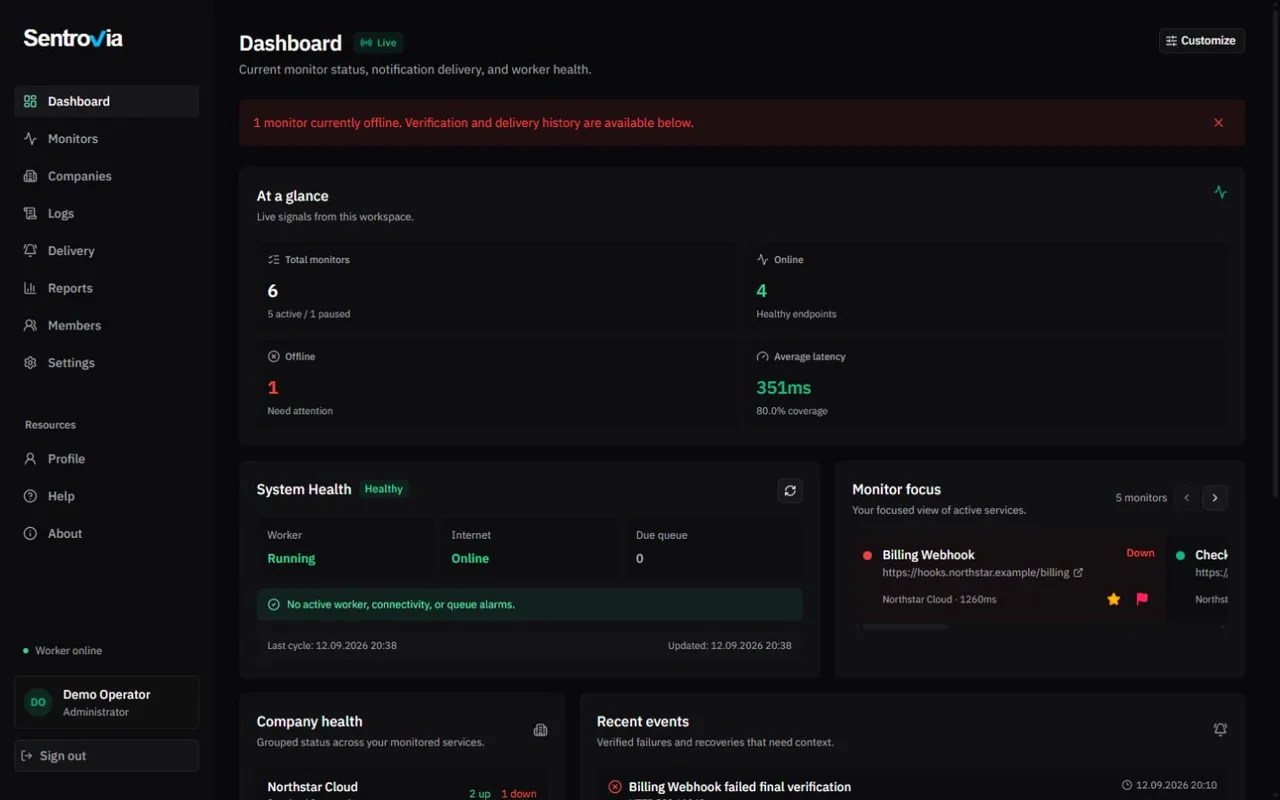
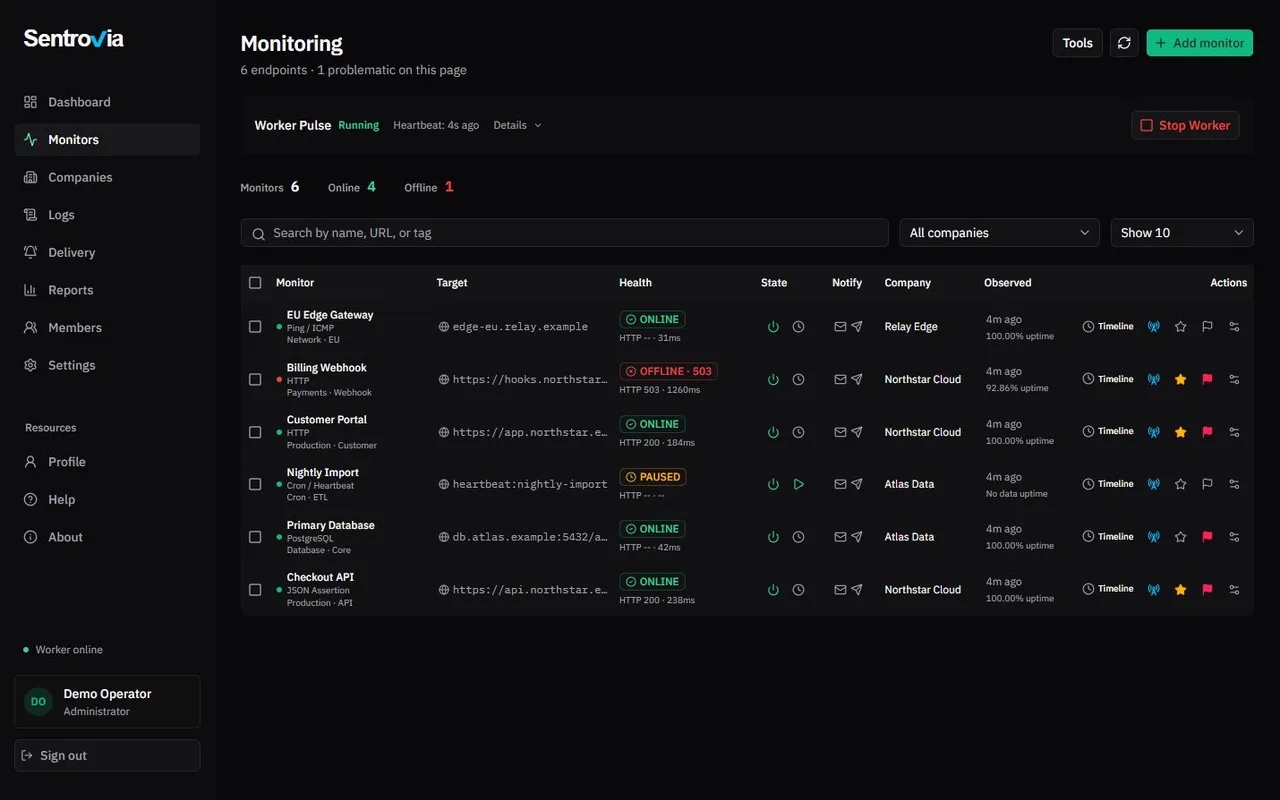
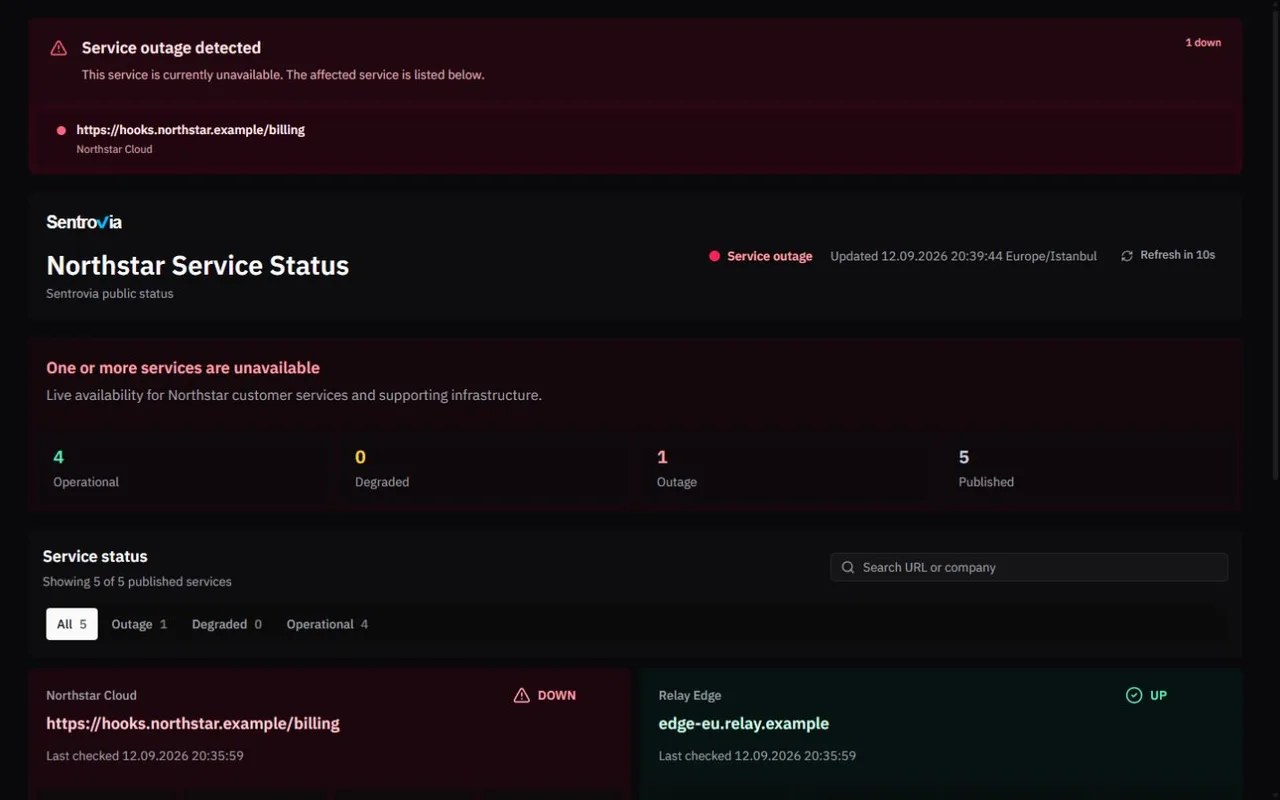
Sentrovia is an open-source uptime monitor you run on your own server. It checks websites, APIs, TCP ports, ping, PostgreSQL databases and cron jobs, and keeps the history, alerts and public status pages in your own PostgreSQL database.
One failed check doesn’t become an outage on its own. Sentrovia retries, checks the monitoring server’s own internet connection, and makes one final probe before it notifies anyone. When something really is down, it keeps the evidence: response details, a timeline and, where possible, a screenshot of what failed.
Alerts go out by email, Telegram, Discord or webhook, with a delivery history that shows which ones actually arrived. Install it with Docker Compose, or run it as Windows services. MIT licensed.
Questions
Is it free?
Yes. It's open source under the MIT license, and you run it on your own server.
How do I install it?
With Docker Compose, or as Windows services.
Sentrovia on GitHubWhat can it check?
Websites, APIs, TCP ports, ping, PostgreSQL databases and cron jobs.
How does it avoid false alarms?
A single failed check isn't an outage. Sentrovia retries, checks its own server's internet connection, and makes one last probe before it tells anyone.
Where do the alerts go?
Email, Telegram, Discord or a webhook. A delivery history shows which ones actually arrived.
Does it report anything back to you?
No. History, alerts and status pages stay in your own PostgreSQL database.
Something else?Report a bugSuggest an idea
Privacy at a glance
- Where it runsYour own server
- Your dataIn your own PostgreSQL database
- Telemetry or analyticsNone. It never reports back to me
- LicenceMIT